
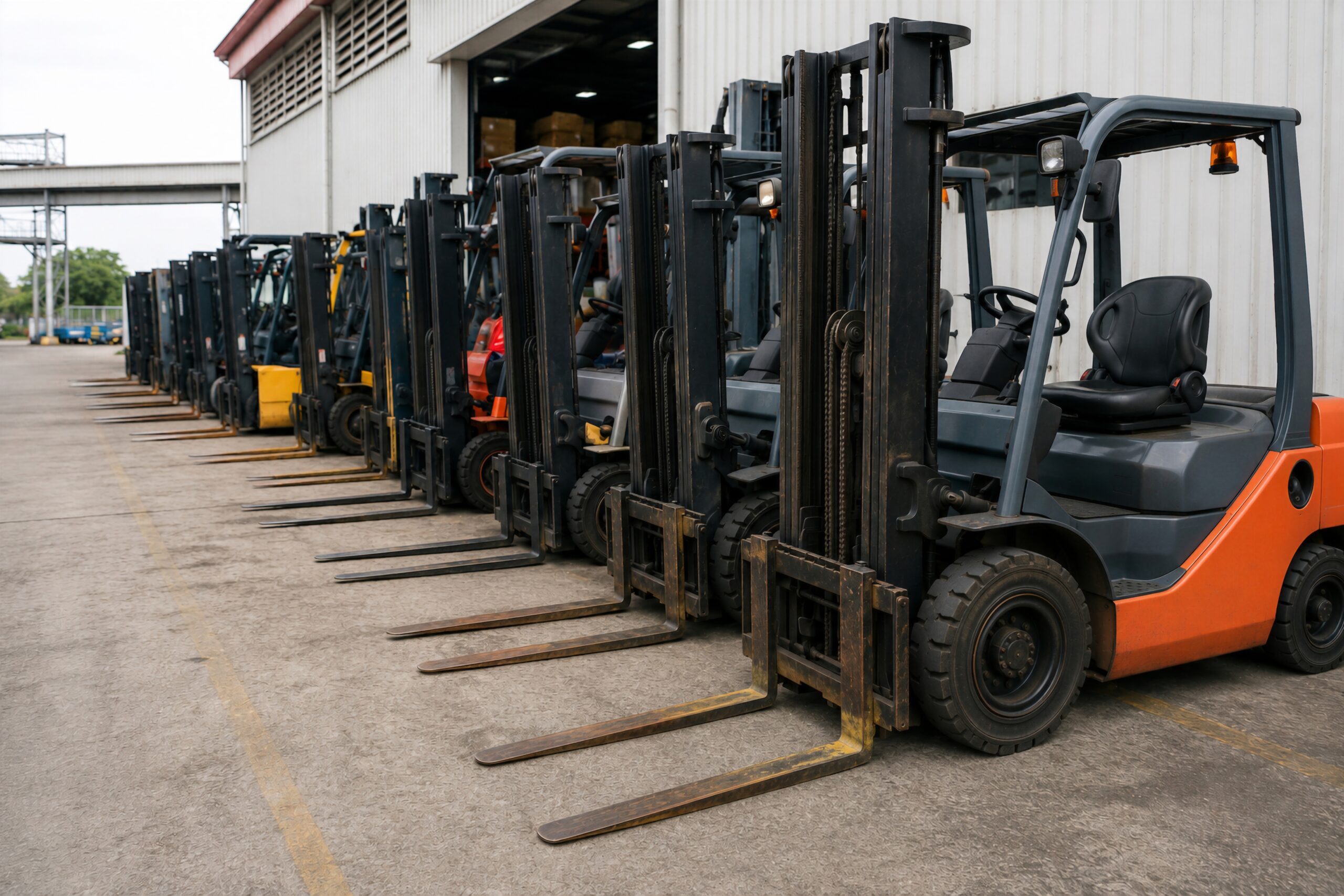
If you’ve got a forklift you no longer need, your first question is likely: how much is it worth?
Unlike a new machine with a published list price, a used forklift’s value depends on several factors.
Two forklifts of the same make and model can have significantly different values depending on their condition, specification and history.
Make, Model and Specification
The manufacturer and model are important starting points.
Some machines attract stronger demand because of their reputation, parts availability or suitability for popular applications.
Lifting capacity, mast type, lift height, fuel type and attachments can all influence value.
A machine with an unusual specification may attract a specific buyer, but it may also have a smaller potential market.
Age and Operating Hours
Age and operating hours help indicate how much use a forklift has experienced.
However, neither should be considered in isolation.
A relatively new machine with very high hours may have experienced more wear than an older machine used occasionally.
Likewise, a well-maintained machine with high hours may still have considerable useful life.
Mechanical Condition
The condition of the engine or drive system, transmission, hydraulics, mast, tyres and brakes can have a significant impact on value.
A machine ready for work is generally more attractive than one requiring substantial repairs.
Visible faults don’t necessarily mean a forklift has no value, but you need to take them into account.
Battery Condition on Electric Forklifts
For electric forklifts, the battery can be a major factor in the machine’s value.
Battery chemistry, age, capacity, operating performance and charging arrangements all matter.
A machine with a healthy battery may be worth considerably more than a similar forklift approaching the point where its battery needs replacement.
Service History and Documentation
A documented maintenance history helps buyers understand how the forklift has been maintained.
Available service records, examination reports and evidence of repairs can all be useful.
Clear identification details and ownership documentation also help make a transaction straightforward.
Market Demand
The value of a used forklift ultimately depends on what buyers are willing to pay.
Demand varies by machine type, specification, condition and availability.
A common warehouse forklift may attract a broad range of buyers, while specialist machines can take longer to match with the right customer.
Selling One Forklift or a Complete Fleet
Selling a single machine differs from selling a complete fleet.
For businesses upgrading equipment, relocating, or reducing operations, selling multiple machines to one buyer may be a more straightforward option than arranging individual sales.
Sell Your Forklift to AMTEC Materials Handling
At AMTEC Materials Handling, we buy used forklifts of all makes and types.
Whether you’ve got a diesel counterbalance forklift, electric machine, reach truck or several surplus forklifts, we’d like to hear what you have.
We’re also interested in certain surplus industrial forklift batteries.