
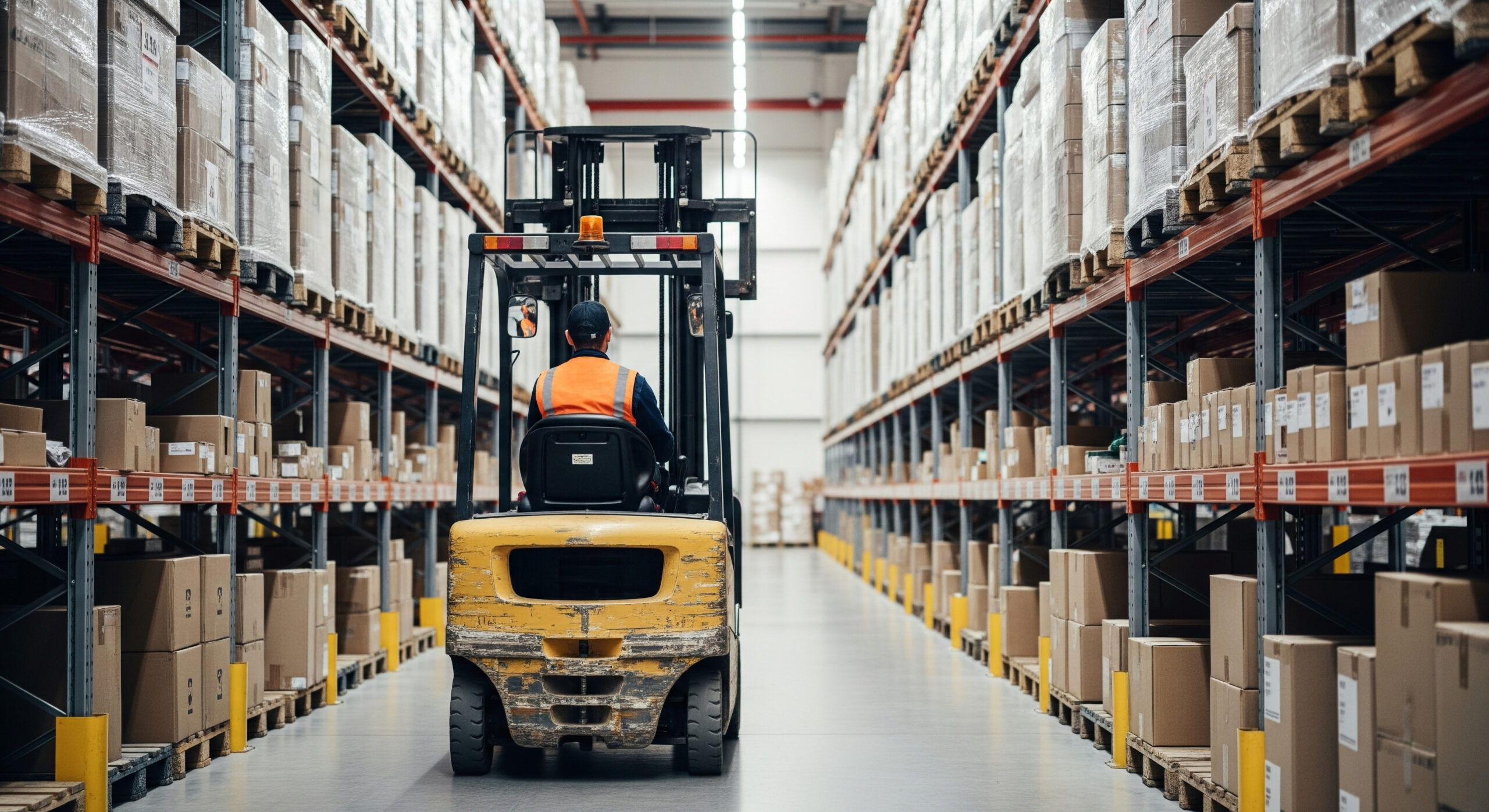
Choosing the right forklift size is essential for safe, efficient materials handling.
Buying a machine that’s too small may make it unsuitable for your loads. Buying one that’s unnecessarily large can leave you paying more for a machine that’s difficult to manoeuvre.
Start by understanding what you need to lift and where you need to move it.
Understanding Forklift Lifting Capacity
Forklifts are commonly described by their rated lifting capacity.
For example, a 2.5-tonne forklift may have a rated capacity of 2,500kg under specified conditions.
However, this does not mean it can safely lift every 2,500kg load in every configuration.
The load’s shape, centre of gravity, lift height, and any attachments can affect the machine’s actual capacity.
Always check the forklift’s capacity plate and the manufacturer’s information for the intended operation.
Why Load Centre Matters
The load centre is the horizontal distance from the front face of the forks to the load’s centre of gravity.
A long or unusually shaped load can place its centre of gravity further forward than a standard pallet.
This changes the forces acting on the forklift and can reduce the weight it can safely handle.
It’s one reason why buying a forklift based on tonnage alone can be misleading.
How High Do You Need to Lift?
Think about the highest point at which you’ll need to place a load.
For warehouse operations, this may be determined by your racking system.
For outdoor work, it could involve stacking materials or loading vehicles.
Make sure the machine’s mast configuration and rated capacity at the required height suit the task.
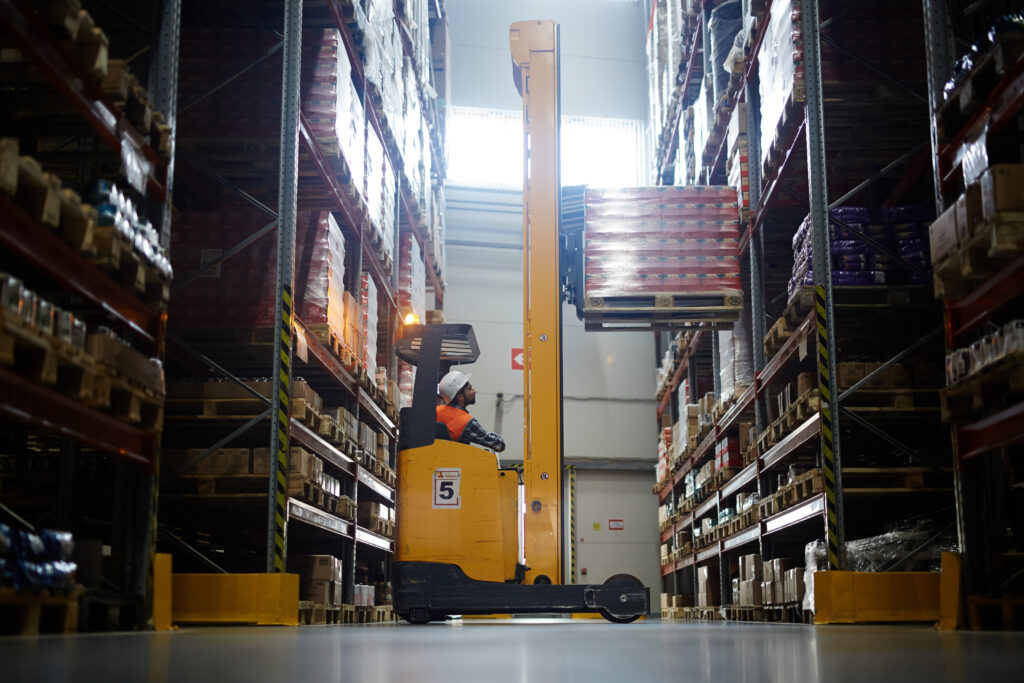
Don’t Forget Overall Height
A forklift might reach high enough but still be unsuitable for your premises.
Check its overall height with the mast lowered, particularly if it needs to pass through doorways, containers or low-clearance areas.
The available overhead clearance during lifting is equally important.
Consider the Space Available
A large counterbalance forklift may work well in an open yard but struggle in a narrow warehouse aisle.
Measure your working aisles, doorways and turning areas.
If space is limited, a reach truck or another specialist warehouse machine may be more appropriate.
Check the forklift’s turning radius and required aisle width against the manufacturer’s specifications.
Tyres and Ground Conditions
Different forklifts are designed for different surfaces.
A machine working on smooth warehouse floors has different requirements from one operating on uneven concrete or outdoor surfaces.
Tyre type, ground clearance and stability all influence suitability.
Choosing the Right Machine
Before purchasing, establish:
- The maximum weight and dimensions of your loads.
- The highest lift required.
- The minimum doorway and overhead clearances.
- The width of working aisles.
- Whether the forklift will operate indoors or outdoors.
- How frequently it will be used.
With this information, it’s much easier to narrow down the suitable machines.