
Buying a used forklift can be a sensible way to equip your business without the expense of purchasing a new one. Whether you’re replacing an ageing machine, expanding your fleet, or buying your first forklift, a wide range of equipment is available.
However, not all used forklifts are equal. Two machines of the same age and model can have very different histories, conditions and remaining working lives.
Here are the main things to consider before you buy.
1. Start With the Job, Not the Forklift
Before comparing machines, establish exactly what you need yours to do.
Consider the maximum weight you’ll lift, the height you need to reach, the space available for manoeuvring, and whether the forklift will work indoors, outdoors, or both.
Also think about how many hours it will operate each day.
A machine that works perfectly in a spacious outdoor yard may be completely unsuitable for a warehouse with narrow aisles and high racking.
Getting the specification right is more important than finding the cheapest machine.
2. Check the Operating Hours
Forklift operating hours are useful, but they don’t tell the whole story.
A machine with relatively low hours may have spent its life working in demanding conditions. Another with higher hours may have been carefully maintained and used for lighter duties.
Consider the hours alongside the machine’s age, condition and maintenance history.
An hour meter is a starting point, not a guarantee of condition.
3. Inspect the Mast, Forks and Hydraulics
The lifting system is one of the most important areas to assess.
Look for visible damage, excessive wear, hydraulic leaks, and unusual mast movement.
Check the condition of the forks, including wear, cracks or distortion. Hydraulic hoses, chains and cylinders should also be assessed.
A suitably competent person should investigate any concerns about the lifting system before the machine is put into service.
4. Examine the Tyres and General Condition
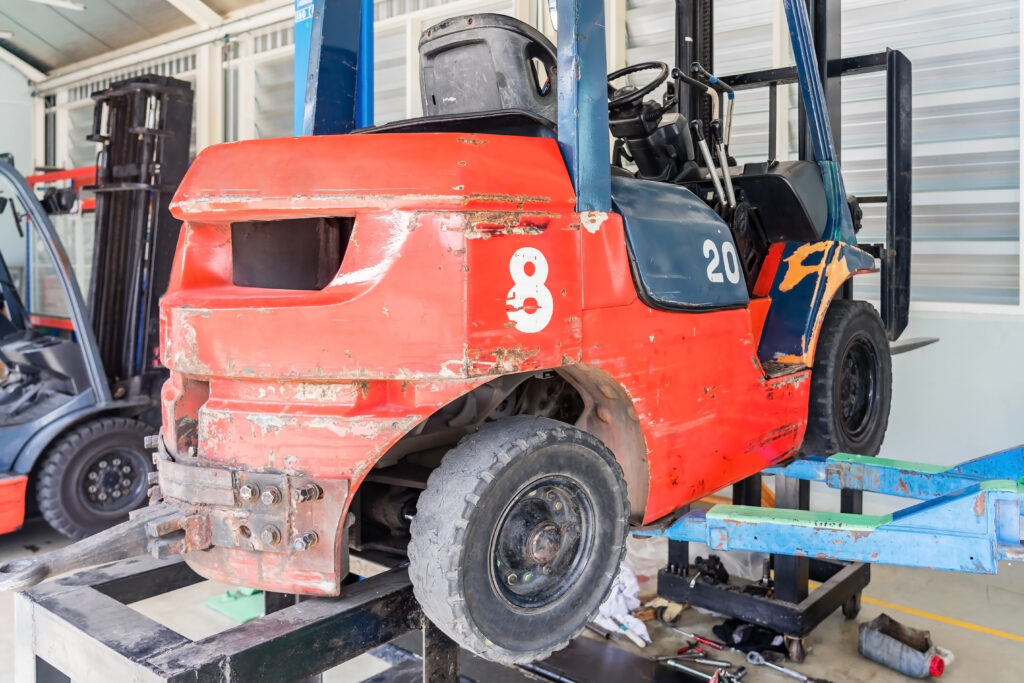
Forklift tyres can be expensive to replace, particularly on larger machines.
Look for excessive wear, damage and uneven tyre condition.
Check the steering, brakes, chassis, and signs of previous repairs.
A tidy-looking machine is encouraging, but fresh paint alone doesn’t show how well it’s been maintained.
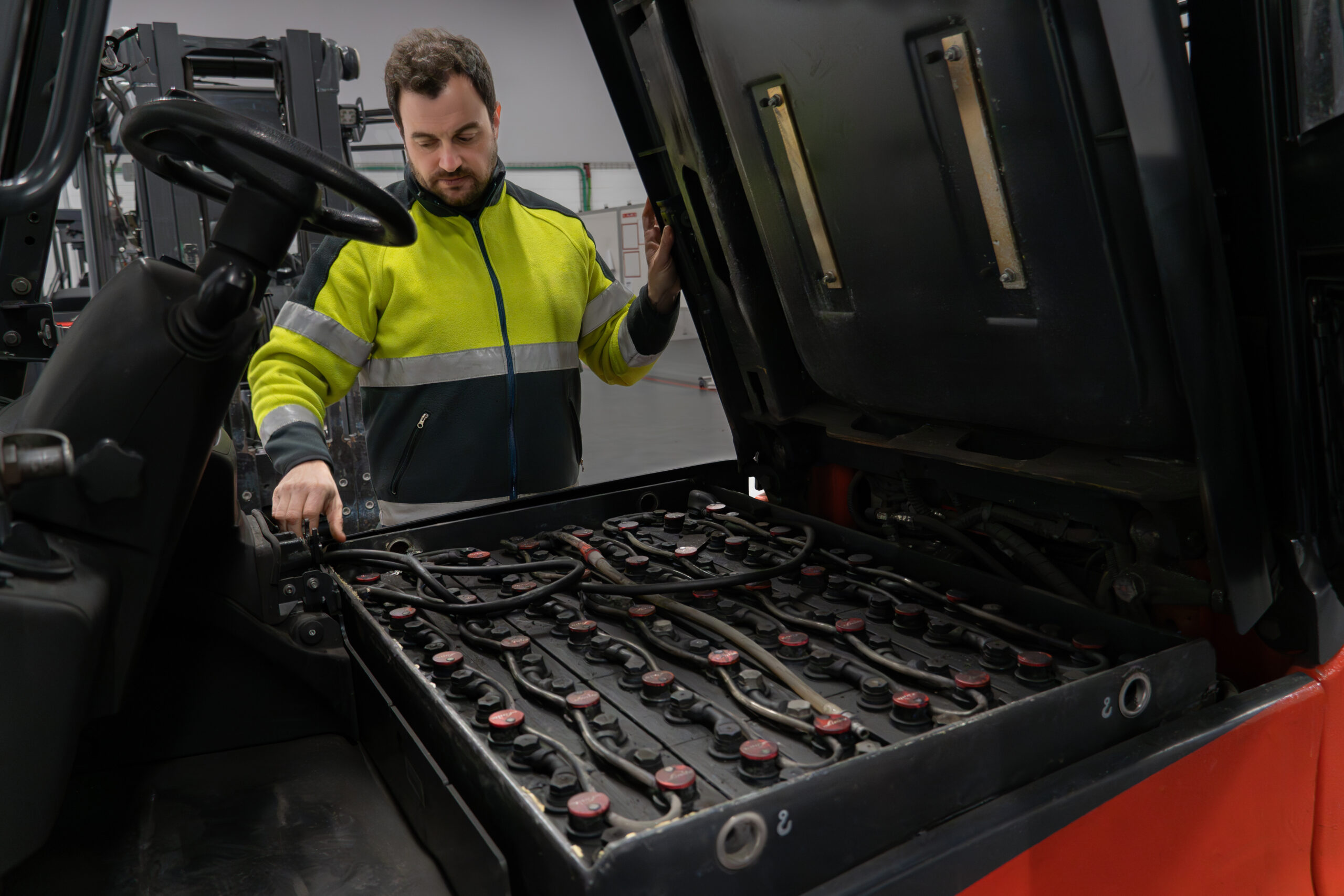
5. Electric Forklifts: Pay Attention to the Battery
If you’re considering an electric forklift, pay close attention to the battery’s condition.
An ageing battery may affect operating time and could represent a significant future expense.
Ask about the battery’s age, chemistry, charging arrangements and available condition or capacity test results.
Check that the supplied charger suits the battery and your electrical installation.
6. Ask for Maintenance and Examination Records
Service history can provide useful insight into how a forklift has been looked after.
Ask about previous repairs, servicing, reported defects and any available thorough examination documentation.
For forklifts used at work in the UK, the relevant requirements under LOLER and PUWER must be met. Routine servicing does not replace the required thorough examination.
7. Consider the Total Cost, Not Just the Purchase Price
The cheapest forklift isn’t always the best-value forklift.
A lower purchase price can quickly lose its appeal if the machine needs tyres, hydraulic repairs or an expensive battery replacement.
Consider its suitability, likely maintenance requirements, availability of parts and expected working life.
Choosing the Right Used Forklift
A good used forklift should suit the work, be accurately described, and include enough information for you to make an informed decision.
At AMTEC Materials Handling, we aim to make buying used equipment straightforward, with clear machine details and practical advice.